Before You Buy a Small Kitchen Gadget: 5 Checks From Real Return Reasons
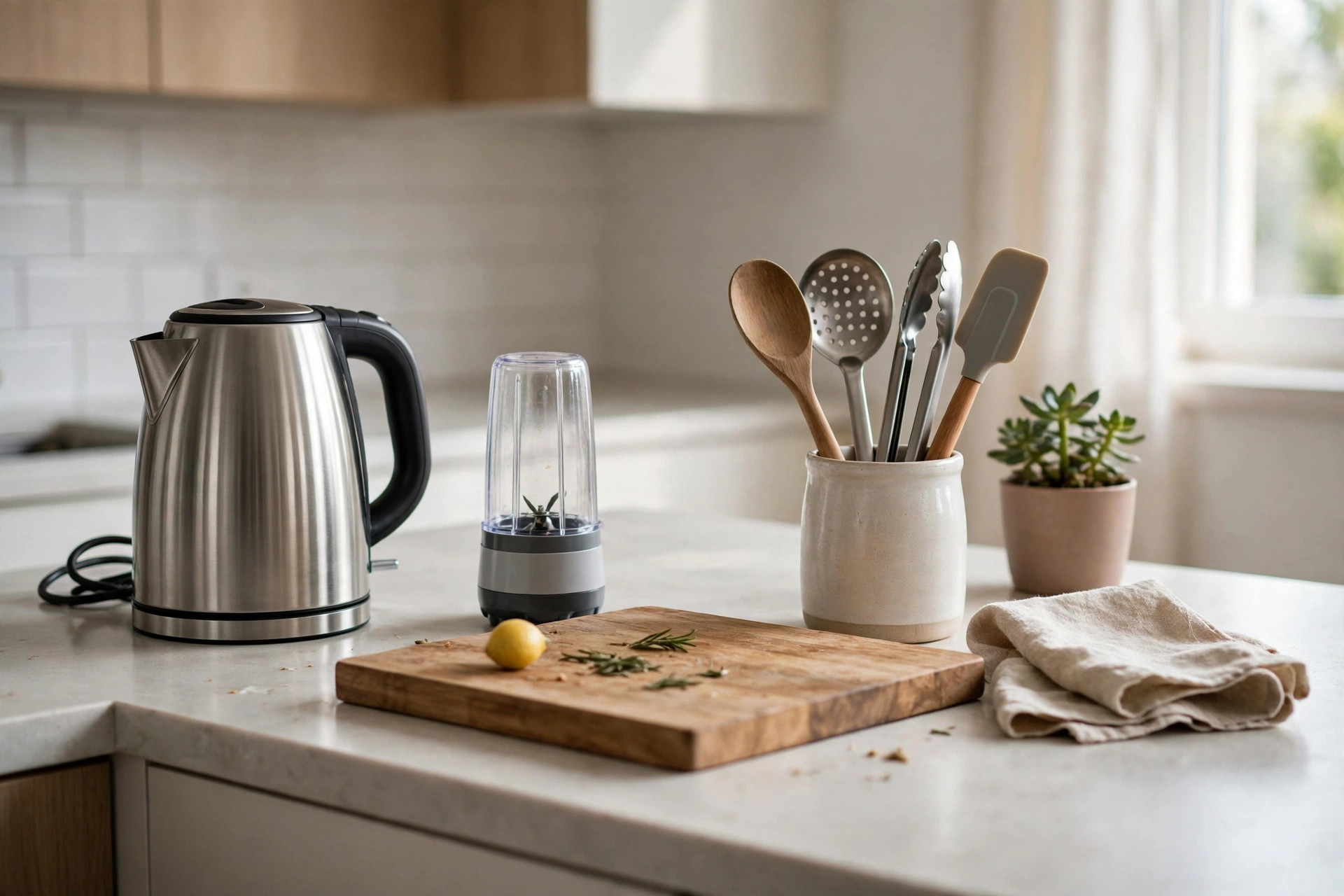
Small kitchen tools live in the $25–$70 sweet spot: cheap enough to buy on impulse, expensive enough to regret. Their return reasons are remarkably consistent. Run these five checks — all drawn from the complaints buyers repeat most — before any of them earns a place in your drawer.
1. The drawer test (real dimensions)
Listings photograph gadgets floating in white space. Measure your drawer or counter corner first, then check the product's full dimensions — including the handle, the cord and the “stored” configuration. “Bigger than expected” is a top-three return reason for this whole category.
2. The washing-up test
If cleaning it takes longer than the task it saves, you will stop using it within a month. Check: how many parts separate, are they actually dishwasher-safe (not “dishwasher-friendly”), and are there seams where food and water hide? Complaints about mould in a seal have killed more gadgets than bad motors.
3. The single-use trap
A tool that does exactly one small job must do it weekly to earn its space. Be honest about frequency: the garnish slicer used twice a year costs more per use than eating out. Multi-use almost always beats perfect-single-use in this price band.
4. The third-month materials check
Search recent 1–3 star reviews for time words: “after a month”, “stopped”, “rust”, “cracked”. Thin coatings, hinge plastics and battery gadgets reveal themselves on this schedule. A product with two years of reviews and no third-month pattern is a genuinely good sign.
5. The counter-space rent
Every gadget pays rent in the scarcest currency in a kitchen: reachable space. If it will live in a cupboard, add the friction honestly — most cupboard gadgets are used a third as often as their owners predicted at checkout.
The short version
| Check | Fail signal |
|---|---|
| Dimensions | Listing hides stored size; reviews say “huge” |
| Cleaning | Many parts, hidden seams, “hand wash only” in fine print |
| Frequency | You would use it less than weekly |
| Materials | Recent reviews mention rust, cracks, dead batteries at month 2–3 |
| Space | It only fits in a cupboard you rarely open |
Method note: these checks summarise recurring return and complaint patterns in public reviews for small kitchen tools, reviewed November 2026, using the method in How to Read 1-Star Reviews. Specific product comparisons — each labelled hands-on or research — will be linked from this page.